From Summer Gear to Holiday Décor: Create a Seasonal Storage System
From Summer Gear to Holiday Décor: Create a Seasonal Storage System
Storage Team
October 12th, 2026
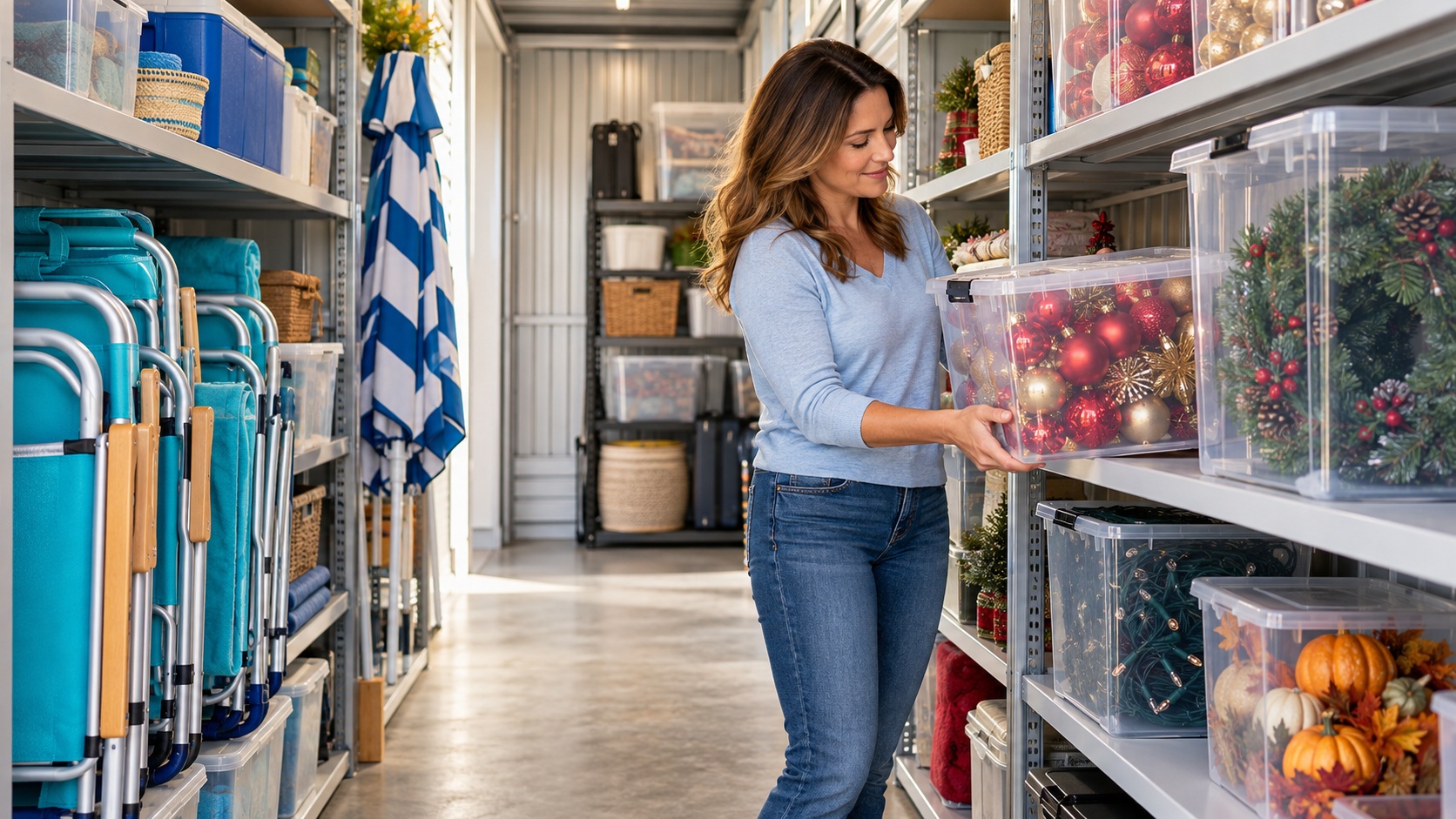
Beach chairs in the garage. Halloween decorations in the hallway. Christmas bins stacked behind the summer pool toys. When every season’s belongings stay at home year-round, finding what you need—and room to live—can become a challenge.A seasonal storage system helps you rotate belongings throughout the year: keep frequently used items at home, pack away what you won’t need for a while, and swap categories as your activities change. With clear labels and a simple schedule, you can spend less time searching and enjoy more usable space.Here’s how to create a system that works for your South Florida home.
1. Sort by When You Actually Use Each Item
Before buying bins or moving anything into storage, group your belongings by activity or occasion.Useful categories include:
- Beach and pool: Chairs, umbrellas, floats, beach toys, and extra towels.
- Travel and outdoor recreation: Luggage, camping equipment, and picnic supplies.
- Fall celebrations: Halloween decorations, costumes, and Thanksgiving table décor.
- Winter holidays: Christmas ornaments, lights, wreaths, and artificial trees.
- Spring occasions: Easter decorations, seasonal entertaining supplies, and other annual event items.
In South Florida, the calendar doesn’t always determine what gets packed away. You might use beach chairs in December or entertain outdoors all year.Store items based on your household’s habits. If you use something every week, keep it accessible at home. If you won’t touch it for several months, it may be a good candidate for storage.
2. Declutter Before You Pack
A storage system works better when it contains belongings you want to use again.As you sort, ask:
- Did we use this during its most recent season?
- Is it complete and in good condition?
- Do we already have something that serves the same purpose?
- Will we realistically use it next year?
Donate usable items you no longer need. Recycle or dispose of damaged belongings appropriately, and separate anything that needs repair.For sentimental decorations, set aside a clearly defined keepsake category. Giving meaningful items their own space helps you avoid mixing them with everyday seasonal supplies.
3. Choose Containers That Fit the Contents
Use sturdy containers that are easy to carry and suited to what you’re packing. Consistent bin sizes can make shelving and stacking easier, but one size won’t work for everything.Consider:
- Divided containers for fragile ornaments.
- Small bins for lights and decorating accessories.
- Protective bags or suitable boxes for artificial trees and wreaths.
- Separate containers for each holiday or activity.
Avoid making bins so heavy that retrieving them becomes difficult. Place heavier containers lower down, and follow the container manufacturer’s stacking guidance.Clean and thoroughly dry beach gear, outdoor equipment, and decorations before packing. Follow each item’s care instructions, particularly for fabrics, electronics, and delicate finishes.
4. Label for Retrieval, Not Just Identification
“Holiday stuff” might make sense when you pack it. Months later, it won’t tell you which bin holds the tree lights.Use labels that name the occasion and the contents:
- Christmas 01 — Tree lights and extension cords
- Christmas 02 — Ornaments and tree skirt
- Halloween 01 — Porch decorations
- Beach 01 — Sand toys and extra towels
Put labels on the top and at least one visible side of each container. Numbering bins also helps you keep an inventory without listing every item on the outside.A simple phone note or spreadsheet can record the bin number, contents, and location. Add a quick photo before closing each bin so you can check what’s inside without unpacking it.
5. Create an Active Zone at Home
Choose one manageable area for the belongings you’re currently using. It might be a garage shelf, a closet section, or a few labeled bins.The purpose is to keep the current season convenient without bringing every season into the same space.For example, during October, your active zone might hold Halloween decorations and fall entertaining supplies. After Halloween, pack those items away before bringing out Christmas décor.Use a “pack away, then bring out” routine. Returning one category before introducing the next helps prevent seasonal clutter from accumulating.
6. Arrange Storage Around Your Next Swap
Whether you use a closet, garage, or self-storage unit, organize it according to what you’ll need next.Keep upcoming seasonal items near the front or on an easily reached shelf. Place belongings you won’t need for several months farther back, while maintaining a clear path to them.If Christmas decorating is next on your calendar, make those bins easy to retrieve. After the holidays, move them back and bring spring supplies forward.Group related containers together and keep labels facing outward. Leave enough room to retrieve a bin without dismantling an entire stack.Before placing items in a self-storage unit, review the facility’s rules. Fuel, chemicals, food, and other restricted materials require separate handling.
7. Build a Rotation Schedule You’ll Actually Follow
You don’t need a complicated calendar. A few reminders around your household’s biggest transitions can keep the system moving.WhenWhat to reviewAfter summer tripsClean and sort travel supplies; store gear you won’t use soon.Before fall celebrationsRetrieve Halloween and Thanksgiving items.After HalloweenPack costumes and decorations; prepare for the next holiday.After the winter holidaysReturn lights, ornaments, and holiday décor to storage.Before spring and summer activitiesRetrieve outdoor gear and check its condition.Adjust these checkpoints to match your plans. A family that visits the beach year-round may keep its basic beach kit at home while storing extra chairs, large umbrellas, or occasional-use equipment.Set reminders far enough ahead of an event to inspect decorations, replace missing pieces, and make one organized storage trip.
Frequently Asked Questions About Seasonal Storage
What is a seasonal storage system?
It’s a way to organize belongings by when you use them. You keep current items accessible and rotate less-used categories into storage until they’re needed again.
How often should I rotate seasonal belongings?
Rotate them when your activities change—usually before or after major holidays, vacations, or outdoor seasons. Let actual use guide your schedule.
How do I keep holiday decorations easy to find?
Pack by holiday, label each container with its contents, and keep a numbered inventory. Store the next holiday’s decorations somewhere easy to reach.
What should stay at home?
Keep frequently used belongings, everyday essentials, and items you may need unexpectedly at home. Seasonal storage is most useful for things you can plan to retrieve.
Make Room for the Season You’re In
A good seasonal storage system gives every category a place and every transition a routine. Instead of squeezing another bin into an overcrowded closet, you can pack away the previous season and make room for what’s next.Florida Secure Self Storage can help you create more space at home for everyday living, entertaining, and family activities.